You sit down to enjoy your favorite meal, take a confident bite, and suddenly—ouch! A sharp, electric flash of pain shoots straight through your jaw. If this sounds familiar, you are likely wondering, why does my tooth hurt when i bite down?
Painless chewing is something we take for granted until even a soft piece of bread triggers an unbearable ache. Unlike a constant, throbbing toothache, pain that only flares up under pressure points to very specific dental issues.
The Core Causes of Pressure-Related Tooth Pain
When you chew, your jaw exerts pounds of direct force onto your teeth. If the internal pulp or the surrounding tissues are healthy, you feel absolutely nothing. However, if there is hidden structural damage or inflammation, that biting pressure acts like pressing down hard on a fresh bruise.
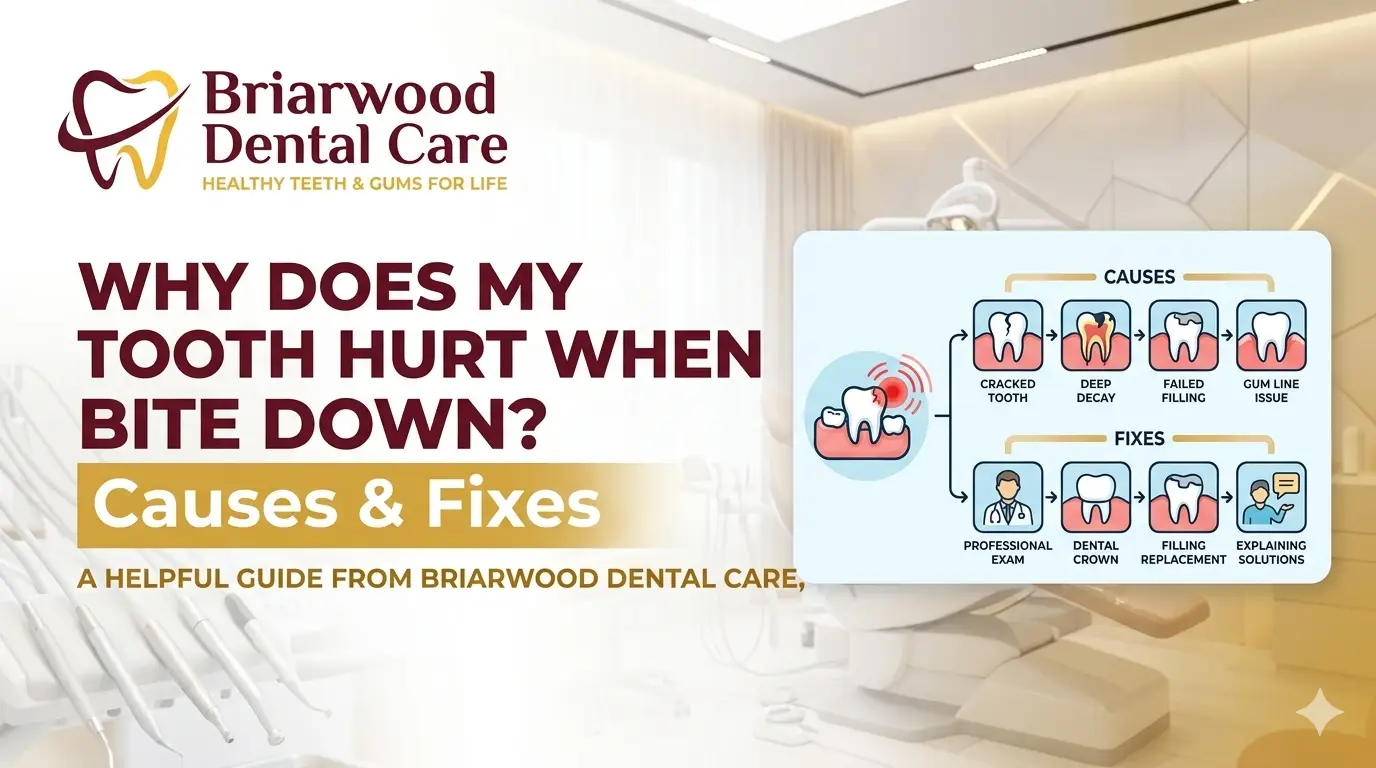
The primary culprits behind this localized pressure pain include:
-
Cracked Tooth Syndrome: A microscopic fracture in the enamel opens slightly when you bite down and snaps shut when you release, instantly pinching the nerve inside.
-
Dental Abscess or Infection: An infection at the root tip creates a small pocket of pus. Pressing down on the tooth squishes this pocket against the hard jawbone, causing immense discomfort.
-
Failed or Damaged Fillings: Over time, old fillings can leak or crack. When you chew, food gets wedged underneath, directly irritating the exposed, sensitive inner dentin.
-
Periodontal Ligament Inflammation: The tiny shock-absorbing fibers holding your tooth in place can become deeply bruised due to clenching, stress, or recent dental work.
Location Analysis: Front Teeth vs. Back Teeth
The location of the problematic tooth tells a huge story about the potential cause. Dental forces are distributed differently across your mouth depending on which tooth is taking the hit.
Why Does My Front Tooth Hurt When I Bite Down?
Your incisors and canines are engineered for shearing and cutting food, not heavy-duty grinding. If you find yourself asking, why does my front tooth hurt when i bite down, the issue is often related to physical trauma or functional habits.
-
Hidden Trauma: Did you accidentally bump your front tooth against a glass, a fork, or an object recently? Even a minor impact can bruise the delicate root ligament, causing it to ache under pressure for weeks.
-
Bruxism (Teeth Grinding): If you unconsciously slide your jaw forward or grind your teeth at night, your front teeth bear an unnatural amount of friction, making them incredibly tender.
-
Thinning Enamel: The enamel on front teeth is naturally thinner. Acid reflux or a highly acidic diet can erode this layer, exposing sensitive pathways to sudden biting forces.
Why Does My Back Tooth Hurt When I Bite Down?
Your molars and premolars handle the heavy lifting of chewing, absorbing hundreds of pounds of pressure daily. If you are questioning, why does my back tooth hurt when i bite down, the structural integrity of the tooth or your sinus health is usually involved.
-
Deep Decay: Because molars have deep grooves and pits, they are highly prone to deep cavities that drill close to the nerve line, causing pain under load.
-
Sinus Infections: The roots of your upper back teeth sit directly beneath your maxillary sinuses. When your sinuses are congested or inflamed, they press down heavily on these roots, making it feel like multiple back teeth are infected simultaneously.
-
High Dental Work: If you recently got a new crown or filling on a back tooth, it might be sitting a fraction of a millimeter too high. This causes that single tooth to take 100% of the biting force, bruising the ligament instantly.
Quick Reference: Pain Symptoms Quick-Guide
| Pain Presentation | Likely Culprit | Immediate Action |
| Sharp pain only when releasing a bite | Cracked Tooth Syndrome | Dental crown or binding filling |
| Dull, throbbing pain that worsens with heat | Deep cavity or dying nerve | Root canal therapy evaluation |
| Chronic ache across multiple upper back teeth | Sinus congestion/pressure | Decongestants or sinus relief |
| Pain accompanied by a pimple on the gums | Abscessed tooth | Emergency dental visit required |
What to Do Until You See a Dentist
If you cannot get an immediate appointment with your dentist, you must protect the tooth from further structural damage:
-
Chew on the Opposite Side: Completely avoid using the painful tooth to prevent cracking a fractured tooth completely in half.
-
Avoid Extreme Temperatures: Stay away from piping hot coffee or ice-cold drinks, as exposed or irritated nerves react poorly to temperature shifts.
-
Warm Salt Water Rinses: Mix half a teaspoon of salt in warm water to reduce soft tissue inflammation around the painful tooth.
Frequently Asked Questions (FAQ)
Q: Can a tooth hurt when biting down but have absolutely no visible cavities?
A: Yes. A micro-crack inside the tooth structure or a bruised ligament underneath the gum line is completely invisible to the naked eye and requires a dental x-ray or transillumination test to diagnose.
Q: Will a tooth that hurts when I bite down eventually heal on its own?
A: If the pain is caused by a minorly bruised ligament from a recent hard bite, it might settle down in a few days. However, if a crack or decay is present, it will never heal on its own and will get progressively worse.
Q: Why does my tooth feel slightly loose and painful when chewing?
A: This often indicates an advanced infection (abscess) at the root tip or severe localized gum disease, both of which weaken the supportive bone holding the tooth stable.