
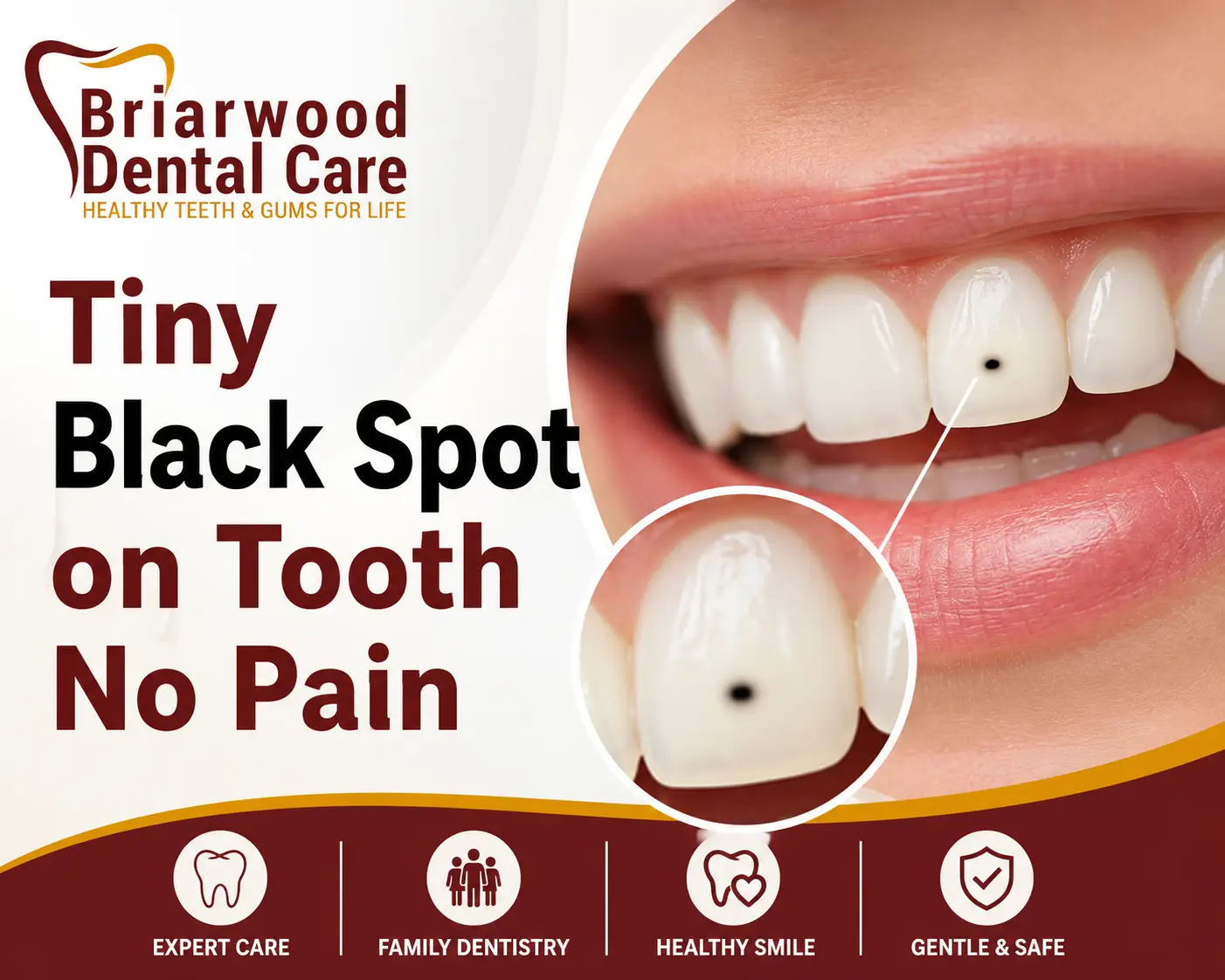
Have you seen a tiny black spot on your tooth but you feel no pain? Many people notice this while brushing or looking in the mirror. At first, it may look small and harmless, but it is still important to understand what it can be.
A black spot on a tooth does not always mean a serious problem. Sometimes it is only a stain. Other times, it may be an early sign of tooth decay. Even if there is no pain, you should not ignore it for a long time.
In this blog, we will explain the common reasons for a tiny black spot on tooth no pain, when you should visit a dentist, and what treatments can help keep your smile healthy.
What Is a Tiny Black Spot on a Tooth?
A tiny black spot is a small dark mark that appears on the surface of a tooth. It may look brown, black, or dark grey. Some spots stay very small for years, while others slowly become bigger.
These spots can appear on:
- Front teeth
- Back teeth
- Near the gums
- Between teeth
- On the chewing surface
Many people feel worried after seeing it, but not every black spot means you have a cavity.
Common Reasons for a Tiny Black Spot on Tooth No Pain
There are many reasons why this can happen. Let us look at the most common ones.
1. Tooth Stain
Sometimes food and drinks leave stains on teeth. Tea, coffee, cola, tobacco, and smoking can create dark spots.
The stain may sit on the outer layer of the tooth and may not cause pain at all.
2. Early Tooth Decay
A black spot can also be the beginning of a cavity. In the early stage, there may be no pain because the damage has not reached the nerve yet.
If ignored, the cavity can become deeper and painful later.
3. Tartar Build-Up
When plaque stays on teeth for a long time, it becomes hard and turns into tartar. Tartar can look yellow, brown, or black.
This is common near the gum line.
4. Small Tooth Crack
Sometimes a small crack on the tooth catches dirt and becomes dark. You may not feel pain unless the crack becomes bigger.
5. Old Dental Filling
Old metal fillings can create dark marks around teeth over time.
6. Natural Tooth Grooves
Some teeth naturally have deep grooves where food and stains collect. These grooves may look black even if the tooth is healthy.
Can a Black Spot Go Away on Its Own?
Usually, no.
If it is only a surface stain, professional cleaning from a dentist may remove it. But if the spot is caused by decay, it will not heal by itself.
That is why regular dental checkups are important.
When Should You Visit a Dentist?
You should visit a dentist if:
- The black spot becomes bigger
- You feel pain or sensitivity
- Food gets stuck in the area
- The tooth feels rough
- The gums around the tooth swell
- You notice bad breath
Even without pain, checking the tooth early can stop bigger problems later.
How Dentists Check the Black Spot
A dentist will carefully look at the tooth and may use:
- Dental mirror
- X-rays
- Tooth explorer tools
- Light scanning
These tests help find out if the spot is only a stain or a cavity.
Briarwood dental care can help patients understand the real reason behind tooth spots and suggest the right treatment.
Treatment Options for a Tiny Black Spot
The treatment depends on the cause of the spot.
Professional Cleaning
If the black spot is from stains or tartar, cleaning may remove it completely.
Dental Filling
If there is a small cavity, the dentist removes the decay and fills the tooth.
Fluoride Treatment
Very early tooth decay may improve with fluoride treatment.
Veneers for Better Smile
Sometimes people want to improve the look of stained or damaged teeth. In such cases, veneers may help.
Many people search for Porcelain Veneers Near Me to improve the appearance of dark spots, chipped teeth, or stained teeth.
Porcelain veneers are thin covers placed on the front of teeth to make them look clean and bright.
Can Bruxism Cause Tooth Spots?
Yes, sometimes it can.
Bruxism means grinding or clenching teeth, mostly during sleep. Grinding slowly damages tooth enamel and may create cracks or dark areas.
People with grinding habits often need proper dental care. Many patients search for Bruxism Treatment Long Island to protect their teeth from further damage.
Signs of bruxism include:
- Jaw pain
- Headaches
- Worn teeth
- Tooth sensitivity
- Cracked teeth
Night guards and stress control are common treatments for this problem.
Home Care Tips for Healthy Teeth
Good daily care helps prevent black spots and cavities.
Brush Twice Daily
Use fluoride toothpaste and brush gently for 2 minutes.
Floss Every Day
Floss removes food and plaque between teeth.
Avoid Too Much Sugar
Sugary foods and drinks increase cavity risk.
Drink More Water
Water helps wash away bacteria and food particles.
Visit Your Dentist Regularly
Regular checkups help find small problems early.
Foods That Can Stain Teeth
Some foods and drinks can leave dark stains over time.
These include:
- Tea
- Coffee
- Red wine
- Cola drinks
- Soy sauce
- Tobacco products
Try rinsing your mouth with water after consuming these items.
Is a Black Spot Always a Cavity?
No, not always.
Many people panic after seeing a dark spot, but it can simply be a stain or harmless groove. Still, only a dentist can confirm the exact reason.
Ignoring it for too long can make treatment more expensive later.
How to Prevent Tooth Decay
Here are simple ways to protect your teeth:
- Brush morning and night
- Use fluoride toothpaste
- Avoid sleeping after eating sweets
- Limit sticky candies
- Clean your tongue
- Replace toothbrush every 3 months
- Get regular dental cleaning
Healthy habits can save your teeth for many years.
What Happens If You Ignore the Spot?
If the black spot is decay and you ignore it:
- The cavity becomes deeper
- Pain may start
- Infection can happen
- Root canal may be needed
- Tooth may become weak
Early treatment is always easier and cheaper.
Difference Between Stain and Cavity
| Stain | Cavity |
|---|---|
| Usually flat | May feel rough |
| No hole | Small hole may form |
| Surface problem | Tooth damage |
| Cleaning may remove it | Needs dental treatment |
| Mostly cosmetic | Can become painful |
Are Children Also Affected?
Yes.
Children can also get black spots because of sweets, poor brushing, or weak enamel.
Parents should regularly check their child’s teeth and schedule dental visits.
Can Whitening Remove Black Spots?
Teeth whitening may help with light stains, but it cannot remove cavities.
If the spot is decay, the tooth must be treated first.
Importance of Early Dental Care
Many dental problems start small and painless. People often wait until pain becomes serious.
Early care helps:
- Save money
- Save the tooth
- Avoid pain
- Prevent infection
A simple checkup today can stop major treatment later.
Final Thoughts
A tiny black spot on tooth no pain may look small, but it should not be ignored. Sometimes it is only a stain, while other times it may be the beginning of tooth decay.
The good news is that early treatment is usually simple and easy. Regular brushing, healthy eating, and dental checkups can help keep your teeth strong and clean.
If you notice a black spot that does not go away, visiting a dentist is the best step. A professional can check the tooth and guide you toward the right treatment before the problem becomes bigger.
FAQ
1. Why is there a tiny black spot on my tooth but no pain?
A tiny black spot may happen because of stains, tartar, or early tooth decay. Sometimes there is no pain because the cavity is still small.
2. Can a black spot on a tooth be harmless?
Yes, some black spots are only surface stains and are not harmful. But it is still important to get the tooth checked by a dentist.
3. Will a black spot on a tooth go away naturally?
No, most black spots do not disappear on their own. If it is a stain, cleaning may help. If it is decay, treatment may be needed.
4. Is a black spot always a cavity?
No, not always. It can also be caused by food stains, tartar, or natural tooth grooves.
5. Should I worry if there is no pain?
Even without pain, you should not ignore a black spot. Early dental problems often do not hurt at first.
6. Can brushing remove a black spot on teeth?
Regular brushing may help with small stains, but deeper stains or cavities usually need professional dental treatment.
7. How do dentists treat tiny black spots on teeth?
Treatment depends on the cause. Dentists may suggest cleaning, fluoride treatment, fillings, or cosmetic treatments like veneers.
8. Can children get black spots on teeth?
Yes, children can also develop black spots because of sweets, poor brushing, or tooth decay.
9. Can teeth grinding cause black marks on teeth?
Yes, teeth grinding can damage enamel and create dark cracks or spots over time.
10. How can I prevent black spots on my teeth?
Brush twice daily, floss regularly, avoid too much sugar, and visit the dentist for regular checkups and cleaning.